
by Stefan J. Bos, Worthy News Europe Bureau Chief
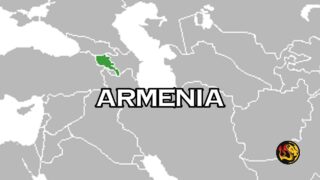
YEREVAN/BUDAPEST (Worthy News) – Armenians voted Sunday in a closely watched parliamentary election that could determine whether the South Caucasus nation continues its gradual shift toward the European Union or restores closer ties with traditional ally Russia, which has warned of serious consequences should Armenia continue its westward course.
Polling stations opened across what is widely regarded as one of the world’s oldest Christian nations. The country’s roughly three million citizens cast ballots amid mounting economic pressure from Moscow and growing debate over Armenia’s geopolitical future.
Prime Minister Nikol Pashinyan is seeking another term on a platform centered on peace with neighboring Azerbaijan and deeper integration with the European Union despite warnings from Russia.
The election has attracted international attention as Armenia seeks to balance its growing ties with Europe against longstanding economic and security links with Moscow.
For many voters, the contest represents a choice between competing visions of the country’s future after years of regional upheaval and shifting alliances.
RUSSIA STEPS UP PRESSURE
Recent months have seen Moscow increase pressure on Armenia through a series of trade restrictions affecting exports ranging from flowers and fish to fruit and the country’s famed cognac industry.
Last month Russian authorities banned imports from several leading Armenian cognac producers, officially citing sanitary concerns. Armenian business leaders and analysts, however, viewed the move as part of broader political pressure ahead of the vote.
The measures have raised concerns in a country that still sends roughly 40 percent of its exports to Russia.
“We just hope this all blows over,” one cognac industry executive told international media, noting that much of Armenia’s brandy production is destined for Russian consumers.
Analysts say the restrictions highlight Armenia’s economic vulnerability as it attempts to diversify trade and deepen relations with Western partners.
PUTIN WARNS OF ‘UKRAINIAN SCENARIO’
Relations between Armenia and Russia have steadily deteriorated since Pashinyan came to power following the 2018 “Velvet Revolution.”
His government’s efforts to strengthen ties with Europe represent Armenia’s most significant foreign policy shift since independence from the Soviet Union in 1991.
Russian President Vladimir Putin recently warned that Armenia could face a “Ukrainian scenario” if it continued moving closer to European institutions, an apparent reference to the war in Ukraine that began with Russia’s full-scale invasion in February 2022.
Former Russian President Dmitry Medvedev also issued sharply worded remarks toward Armenia’s leadership, underlining growing tensions between the two countries.
Observers say Moscow fears losing influence in a strategically important region that bridges Eastern Europe and Western Asia.
NAGORNO-KARABAKH CRISIS EMERGES
Tensions deepened after Azerbaijan regained control of the disputed Nagorno-Karabakh region in 2023.
The offensive triggered the displacement of more than 100,000 ethnic Armenians from the mountainous enclave, ending decades of Armenian control there.
More recently, U.S. President Donald Trump brokered a preliminary Armenia-Azerbaijan peace framework that includes plans for a U.S.-managed transit corridor linking mainland Azerbaijan with Nakhchivan, a separate Azerbaijani region west of Armenia. Supporters say the initiative could boost regional stability while also increasing U.S. influence in the South Caucasus at a time when Russia’s role in the region is being questioned.
Many Armenians regarded Moscow’s response to the Nagorno-Karabakh crisis as a watershed moment in bilateral relations.
Despite maintaining peacekeepers in the region and belonging with Armenia to the Moscow-led Collective Security Treaty Organization (CSTO), Russia largely stood aside as Azerbaijani forces consolidated control over the territory.
ARMENIA’S GEOPOLITICAL CHOICE
The events prompted Armenian leaders to openly question the reliability of Russian security guarantees.
Pashinyan’s government subsequently suspended participation in the CSTO, arguing that the alliance had failed to protect Armenian interests during one of the most serious crises in the country’s modern history.
Supporters of the government’s approach say closer cooperation with Europe offers opportunities for economic development, democratic reforms, and greater independence from Moscow.
Critics counter that distancing Armenia from Russia could carry significant economic and security risks given the country’s geography and regional challenges.
Sunday’s vote is therefore widely viewed as a referendum not only on Pashinyan’s leadership but also on whether Armenia continues its westward trajectory or returns to a closer alignment with Russia.
Copyright 1999-2026 Worthy News. This article was originally published on Worthy News and was reproduced with permission.
Latest News from Worthy News

The Senate on Friday blocked a measure to extend a major U.S. surveillance authority, as Democrats and a handful of Republicans objected to advancing the Foreign Intelligence Surveillance Act’s Section 702 powers amid growing concern over President Donald Trump’s decision to name William Pulte as acting director of national intelligence.

The U.S. labor market remained stronger than expected in May, as employers added 172,000 jobs and the unemployment rate held steady at 4.3%, according to new data released by the Bureau of Labor Statistics.

Iran fired a volley of missiles toward northern Israel on Sunday night, pushing the region back toward the brink of open war after Tehran made good on its warning that an Israeli strike in Beirut would bring Iranian retaliation.

The Israel Defense Forces struck Hezbollah command centers in Beirut’s Dahiyeh district on Sunday, escalating Israel’s campaign against the Iran-backed terrorist group after renewed fire from Lebanon toward Israeli territory.
Armenians voted Sunday in a closely watched parliamentary election that could determine whether the South Caucasus nation continues its gradual shift toward the European Union or restores closer ties with traditional ally Russia, which has warned of serious consequences should Armenia continue its westward course.
Slovenia entered a new political era this weekend after parliament approved a center-right government led by pro-Israel Prime Minister Janez Jansa, a move expected to reverse several Middle East policies adopted by the previous administration.

A community police officer in northern England has won a settlement after his suspension for questioning Islam in a case that underscored broader concerns about workplace pressure on devout Christians, his defense team told Worthy News.