
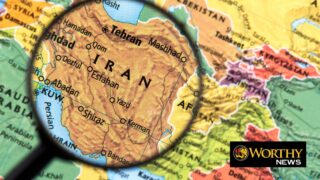
Historic St. Peter’s Evangelical Church faces confiscation as Iranian Christians endure prison, eviction, and growing state pressure
by Emmitt Barry, Worthy News Washington D.C. Bureau Chief
(Worthy News) – Iranian authorities are moving to confiscate Tehran’s historic St. Peter’s Evangelical Church and evict Christian families from the church compound, marking another escalation in the Islamic Republic’s long campaign to suppress Protestant Christianity and restrict public Christian worship.
St. Peter’s Evangelical Church, one of the oldest Protestant churches in Iran’s capital, is set to be transferred to the Execution of Imam Khomeini’s Order, known as EIKO, a powerful state-controlled entity tied to the seizure of religious and private property. The move follows a Revolutionary Court ruling from the late 1990s that church leaders say they were not properly informed of and were denied a meaningful opportunity to contest. Article18 reported that the Council of Evangelical Churches of Iran did not become aware of the ruling until 2008 and has repeatedly challenged the decision.
About 20 Armenian and Assyrian Christian families living on the compound have reportedly been ordered to leave within weeks, while church members have been told to find another place to worship. The compound includes the sanctuary, schools, and residential buildings that have served Iran’s historic Christian communities for generations.
According to reports, intelligence agents recently spent hours inside the compound, telling residents they had come so the families could “become accustomed” to their presence. Church leaders have also reportedly been warned that they could face arrest if residents refuse to comply with eviction orders.
The seizure of St. Peter’s follows the closure or confiscation of several other Protestant properties in Iran, including Presbyterian churches in Tabriz and Mashhad, as well as an Assemblies of God church in Gorgan. Religious freedom advocates say the pattern reflects a deliberate state strategy: eliminate independent Protestant institutions, silence Persian-language worship, and keep Christian activity under strict government control.
A System Built On Religious Control
The targeting of St. Peter’s reflects a broader structure of religious repression that has existed since Iran’s 1979 Islamic Revolution.
Iran is governed under a theocratic system rooted in Twelver Shia Islam, where state authority and religious ideology are intertwined. Although Iran officially recognizes certain historic Armenian and Assyrian Christian communities, that recognition is narrow, fragile, and increasingly subject to state pressure.
Churches serving these communities face heavy surveillance, leadership restrictions, property pressure, and interference by intelligence services. The situation is far more dangerous for Muslim-background believers who convert to Christianity, as Iran does not recognize conversion from Islam and routinely portrays Christian converts as national-security threats.
House churches are frequently raided. Bibles and Christian literature are confiscated. Believers are interrogated, imprisoned, and prosecuted on vague charges such as “acting against national security.”
Article18’s annual report documented that 96 Christians were sentenced to a combined 263 years in prison in 2024, compared with 22 Christians sentenced to 43.5 years in 2023 — a sixfold increase in total prison time.
Persian Churches Systematically Pushed Underground
For much of the 20th century, Protestant churches in Iran openly ministered in Persian and welcomed people from Muslim backgrounds. After the Islamic Revolution, however, authorities began steadily closing Persian-language congregations or pressuring churches to stop holding services in the national language.
Today, most officially recognized Protestant churches are permitted to worship only in Armenian or Assyrian, effectively barring Persian-speaking seekers and converts from participating in legal public church life.
As a result, Iran’s Christian movement has increasingly moved into homes, private gatherings, and underground networks. These house churches now form the backbone of Iranian Christianity — and remain among the chief targets of the regime’s intelligence services.
Yet persecution has not stopped the Gospel’s advance.
Despite arrests, surveillance, and imprisonment, Iran is widely regarded by Christian ministries and mission observers as home to one of the fastest-growing church movements in the world. International Christian Concern has described the church in Iran as “one of the fastest-growing in the world,” while other Christian observers have reported an “explosion of growth” among Iranian believers in recent decades.
The paradox is striking: as the Islamic Republic works to erase visible Christianity from public life, the underground church continues to expand quietly through discipleship, house gatherings, satellite media, online ministry, and the courageous witness of believers willing to suffer for their faith.
Prophecy Watch: Elam And The Future Of Iran
For many Bible-believing Christians, events in Iran carry not only geopolitical and religious-freedom significance but also prophetic interest.
In Scripture, the ancient region of Elam included territory in what is now southwestern Iran. The prophet Jeremiah declared judgment upon Elam, saying the Lord would “break the bow of Elam” and scatter its people among the nations. Yet the prophecy does not end in destruction. It closes with a remarkable promise: “But it shall come to pass in the latter days: I will bring back the captives of Elam,” says the Lord. [Jeremiah 49:34–39]
That passage should be handled carefully and soberly. It is not a license for speculation, nor should it be forced into every headline. But it does remind believers that God’s purposes for the peoples of the region are not finished. Even in a nation ruled by an openly hostile Islamic regime, the Lord is able to preserve a witness, redeem lives, and bring spiritual awakening where men least expect it.
As Iran’s rulers tighten their grip on churches, prisons, and property, the growth of the underground church stands as a quiet testimony that the Word of God is not chained.
International Concern Grows
The U.S. Department of State has designated Iran as a Country of Particular Concern for religious freedom every year since such designations began in 1999, citing systematic and egregious violations.
For Iranian Christians, the attempted seizure of St. Peter’s is more than the loss of a historic building. It represents another stage in a decades-long campaign to dismantle Christian institutions, restrict worship, imprison converts, and erase the visible Protestant presence from Iranian society.
But while the regime may be able to seize buildings, it has not been able to extinguish the Church.
Copyright 1999-2026 Worthy News. This article was originally published on Worthy News and was reproduced with permission.
Latest News from Worthy News

A new AP-NORC poll has put numbers behind a political earthquake long felt by Israel’s supporters: the Democratic Party’s base is turning sharply against the Jewish state. After nearly two years of war following Hamas’ October 7 massacre, Democratic voters are no longer merely criticizing Israeli policy; growing numbers now believe America is too supportive of Israel, too unsupportive of the Palestinians, and willing to embrace accusations against Israel that Republicans overwhelmingly reject.
Iranian authorities are moving to confiscate Tehran’s historic St. Peter’s Evangelical Church and evict Christian families from the church compound, marking another escalation in the Islamic Republic’s long campaign to suppress Protestant Christianity and restrict public Christian worship.

At least three people were killed and dozens more injured Wednesday as Russia and Ukraine exchanged fresh long-range attacks, while Kyiv struck deep inside Russia, forcing the shutdown of the country’s largest oil refinery and raising fresh concerns about the Kremlin’s fuel supplies.

The NATO military alliance, long seen as a symbol of unity among Western allies, faced growing internal strife Wednesday as Denmark vowed to defend its territory after U.S. President Donald J. Trump again insisted that the United States should control the strategically located Arctic territory of Greenland.
A court in Pakistan’s Punjab province has acquitted Dennis Albert, a Christian man who had spent nearly 19 months in custody in a blasphemy case, but concerns remained Wednesday over the safety of Christians in the region after reports that another Christian family’s home was torched in an alleged revenge attack.

More than 1,000 suspected human traffickers have been arrested and over 2,000 victims identified in one of the world’s largest coordinated crackdowns on modern slavery, the international police organization Interpol announced.
Italy says it will stop responding to what it called provocative remarks by U.S. President Donald J. Trump in an effort to avoid further tensions between the NATO allies.